Linen sheets rarely fail all at once. They thin at the fold, fray along the hem, and go pale and soft in the middle where heels and elbows land, long before a hole actually appears.
Catch that thinning early and a sheet that has been in rotation for years can carry on for years more. And when it does finally give up, the sound parts are still worth keeping. Flax is a long, strong fibre, and even a well-worn sheet holds a surprising amount of good cloth.
Linen is made from flax, a fibre that is naturally strong and gets softer with every wash rather than pilling or bobbling. That is why second-hand linen often feels better than new. Its weakness is abrasion, not age, so the wear is gradual and fairly predictable: fitted sheets go first at the elastic corners and across the middle, flat sheets along the top hem and wherever feet rest.
Hold a sheet up to a window. Thin areas show as translucent, almost grey, patches. Those are the places to work on now, while there is still fabric to stitch into. Turning sheets over between washes, and alternating two or three sets rather than wearing one out, spreads the strain.
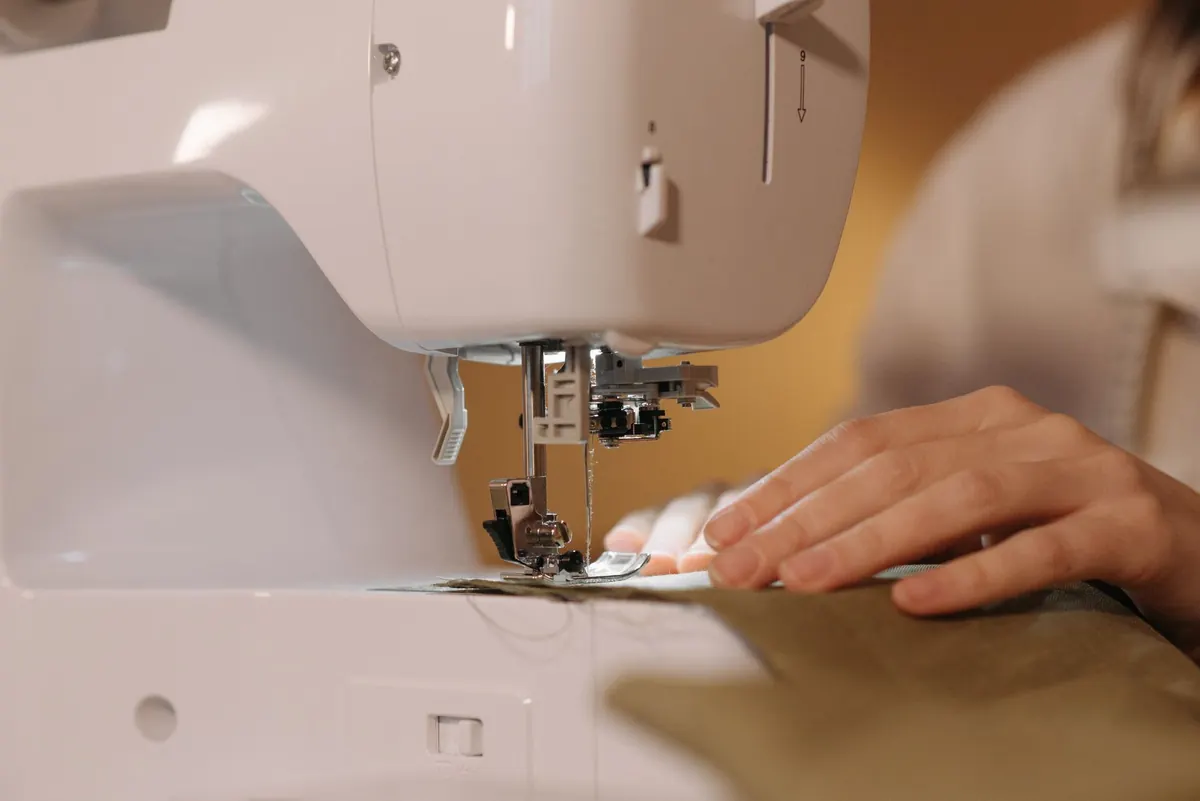
Rows of running stitch are the quickest way to shore up a thin patch before it tears. Mark a rectangle around the worn area with chalk, then work parallel rows about 3–5mm apart across it, with stitches roughly the same length as the gaps between them. Do not pull tight. The cloth should stay flat, and the rows should sit slightly slack so the sheet does not pucker when it is washed. Contrasting thread turns the whole thing into a feature rather than a confession. The middle of a sheet, where blankets will cover it, is a forgiving place to practise.
For a hole in the middle of a worn area, patch from behind. Cut a piece of matching linen a couple of centimetres bigger than the hole on every side, round the corners, pin it behind, then stitch around the edge of the patch and around the hole itself with small, even stitches. For a straight split, such as a tear running up from a hem, patch from the front: turn the edges of the patch under by a centimetre and stitch close to the fold. Wash and dry any patch fabric before you use it, so it has already shrunk and will not pull the repair out of shape later.
Slip a darning mushroom or a smooth jar under the hole so the fabric lies flat and slightly stretched. Work vertical threads across the gap, anchoring each one a centimetre or two into sound fabric beyond the edge. Then weave horizontal threads over and under the vertical ones until the hole is filled. Keep the tension relaxed. Tight darning creates a hard lump of thread that will rip free the next time the sheet goes through the machine.
A frayed hem does not need to be a lost cause. Trim the worn strip back to sound cloth, then turn up a centimetre, turn it again, and stitch — you have simply made the sheet a few centimetres shorter. On a fitted sheet, a split corner seam can be resewn with a small zigzag stitch, and slack elastic can be replaced by opening the channel, threading new elastic through with a safety pin, and closing it up again. It is a twenty-minute job that saves the whole sheet.
Some sheets are past sleeping on but nowhere near past using. The trick is to work out which parts are still strong: usually the middle of a flat sheet, or the outer edges of one that wore thin in the centre.
Mend before you wash, not after — a small hole becomes a large one in a hot cycle. Wash at 40°C or cooler, skip bleach and fabric softener, and line dry where you can. Tumble drying is what ages linen fastest, and it is hard on hand stitching. Iron slightly damp if you like a crisp finish, and store mended sheets in rotation so the repairs are not always under the same pressure points.
Pull out the sheet you have been avoiding, lay it on a table, and hold it up to the light. Anything translucent gets stitched; anything torn gets patched; anything beyond saving gets cut into squares and stacked for napkins or bags. Set aside an hour, put the radio on, and do one repair rather than planning five. Mended linen has a quiet, patched, useful look that new bedding cannot fake — and every stitch you put in is another year of use out of cloth that has already given you plenty.
Photo: Pavel Danilyuk / Pexels
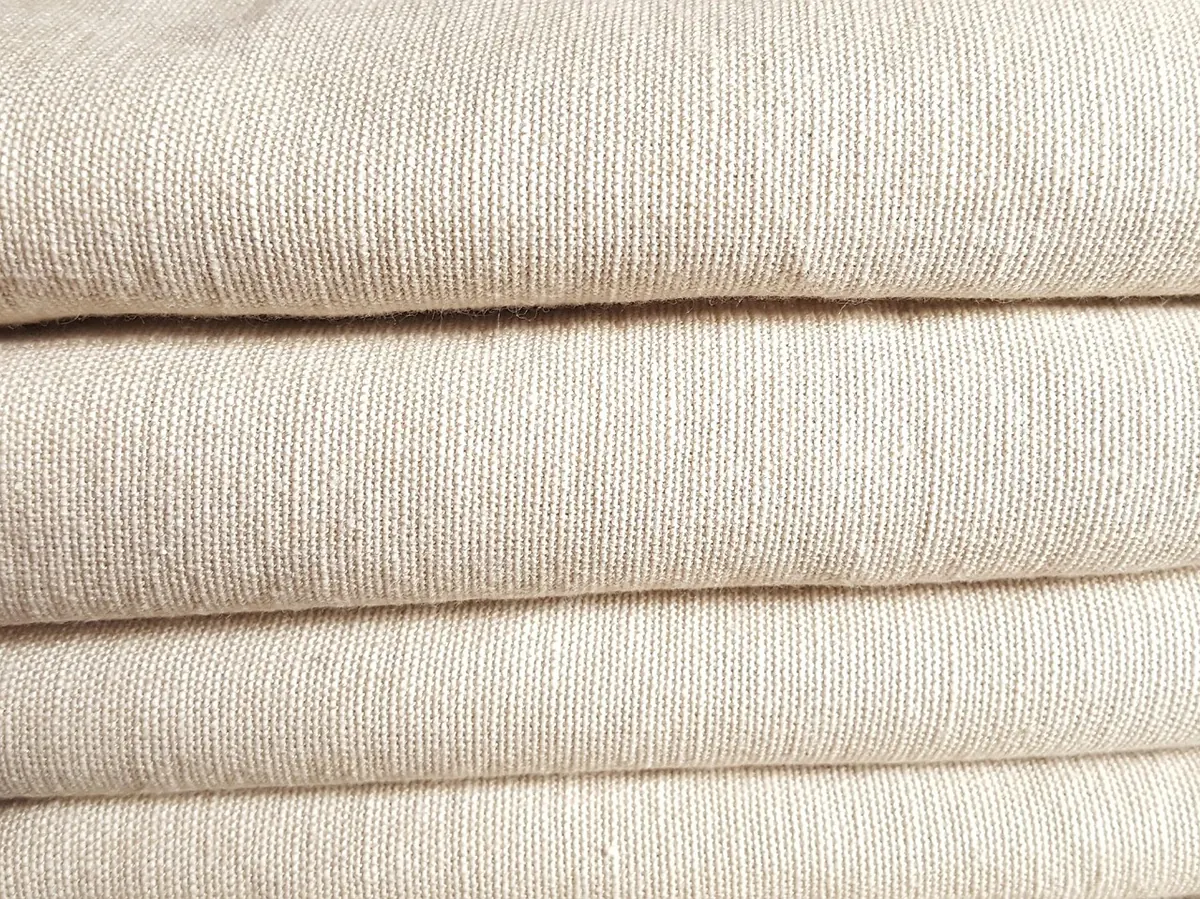
A practical guide to common linen weaves — plain, twill, herringbone, basket, sateen and huckaback — explaining how...

How to pair linen curtains with cottages, Georgian rooms and Victorian terraces — choosing colours, linings and...
A practical, stain-by-stain guide to treating tea, wine, grease and ink marks on linen tablecloths — without...

Celebrating the beauty and versatility of linen..
