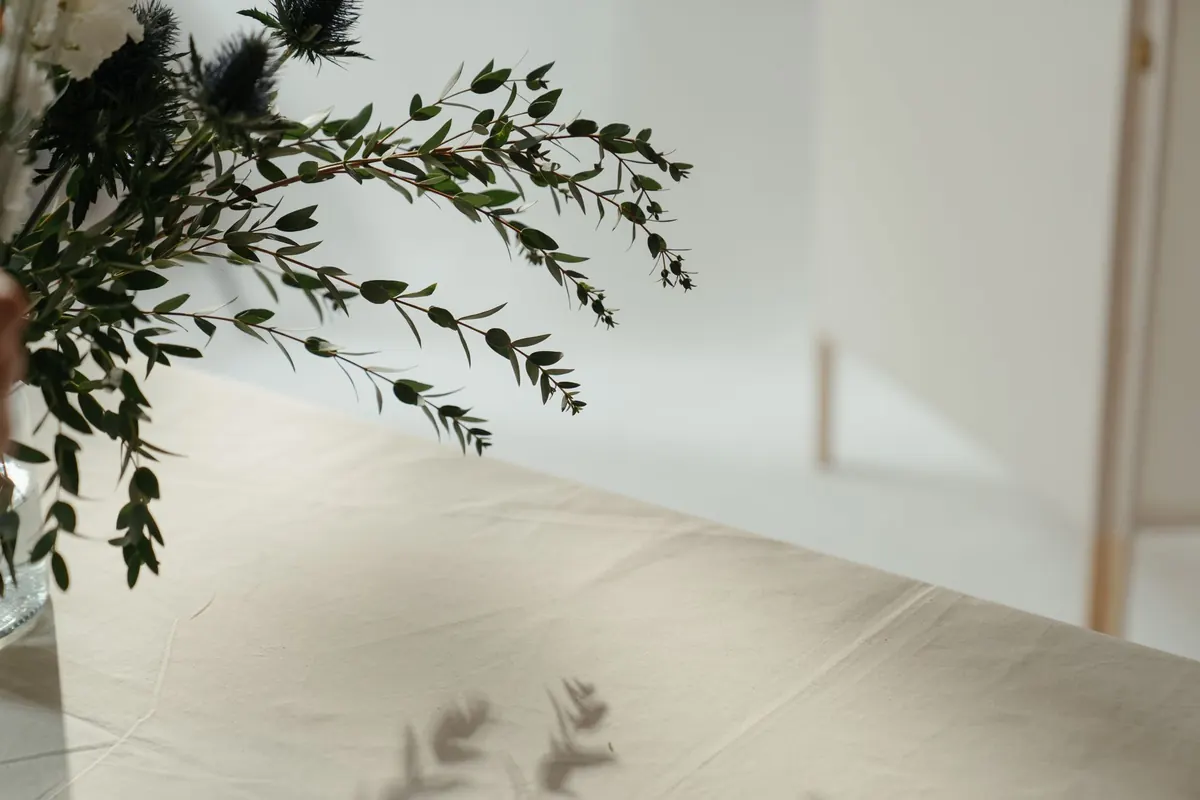
A linen tablecloth earns its marks. The pale ring where a teacup sat, the red crescent of a wine spill, a smear of butter near the hem — these are the small tax on a good dinner. The reassuring news is that linen is far tougher than its slightly precious reputation suggests. Flax fibres are strong, absorbent and surprisingly forgiving. What they are not is patient. Most stubborn stains are simply ones that were left to dry, or that met a hot iron before they met cold water. Treat the mark early, choose the right method for that particular stain, and the cloth usually comes back to its original self.
Whatever has landed on the table, the first moves are the same.
Keep a white towel and white kitchen roll to hand rather than coloured ones, which can transfer dye when damp. And if you cannot deal with the stain immediately, rinse it under cold water and leave the cloth soaking rather than dropping it in the basket to dry — or worse, hanging it over a radiator.
Heat is the enemy. Once a stain has been through a warm wash, a tumble dryer or an iron, it stops being a stain and becomes part of the cloth.
These are tannin stains, and they respond well to cold water and oxygen.
If the tea or coffee contained milk, start with cool water. Heat will set the milk protein and you will be left with a faint grey shadow long after the brown has gone. Hold the stained area under a running cold tap, working from the wrong side, until the water runs clear. For a fresh mark that is usually enough to loosen the worst of it.
For anything that has begun to dry, soak the cloth in cool water with an oxygen-based stain remover — the sort sold as a powder that fizzes in warm water — for at least half an hour, and up to a few hours for an older mark. Stir it once or twice so the solution reaches the whole stain.
Chlorine bleach feels like the obvious answer on white linen and is usually the wrong one. It attacks cellulose fibres, weakening them over repeated use, and it can leave linen with a yellow cast rather than a bright white one. Oxygen bleach is kinder and, on tannin stains, more effective.
For a fresh red wine spill, blot up as much as you can, then cover the mark with a generous heap of fine salt and leave it for ten minutes. The salt pulls liquid out of the fibres. Brush it away and flush the area with cold water.
If you have a bowl big enough, stretch the stained section over it and pour cold water through from a height — the pressure pushes the wine out instead of spreading it. A glass of sparkling water poured over a fresh spill also helps to lift the pigment before it grips, though it will not rescue a stain that is already dry.
White wine looks harmless as it dries and then often reappears as a dull brownish patch a day or two later. Treat it in exactly the same way as red: cold water first, then an oxygen soak. Do not be tempted to leave it because you cannot see it.
Oil and linen are a stubborn combination because water alone will not shift fat. Start by absorbing. Cover the mark with cornflour or talc and leave it for fifteen to twenty minutes, then brush it off and repeat if the powder clumps.
Next, apply a small drop of washing-up liquid directly to the mark and work it in gently with your fingertips, adding a few drops of warm water to make a paste. Leave it for five minutes, then rinse. If a faint outline remains, repeat once more before washing.
Wash greasy linen as hot as the care label allows; linen generally tolerates higher temperatures than most fabrics, though dyed and older pieces may not. Check the label rather than guessing. And do not iron the cloth until you are certain the grease has gone — heat fixes fat into the fibre and makes the mark permanent.
Ink needs a solvent, not soap. Soap and water first will only spread it across a wider area.
Ballpoint ink responds best to this method. Fountain pen ink is often water-based and may lift with cold water alone, so try that first. Hairspray used to be the standard trick for biro marks, but modern formulas contain far less alcohol and are less reliable — if you use it, test on the hem first. Always treat ink in a well-ventilated room, away from naked flames.
Once the stain has been treated, wash the cloth on the hottest setting the care label permits, using a mild detergent and giving it room to move in the drum. Skip fabric softener; it coats the fibres, reduces their absorbency and can leave marks looking dull rather than clean.
Never wring linen. Roll it in a towel and press down to remove excess water. White linen benefits from drying in direct sun, which has a gentle whitening effect; coloured linen should dry in the shade to protect the dye. Take the cloth in while it is still slightly damp — a little moisture makes pressing far easier. Iron on the reverse with a hot setting and plenty of steam, and press the hems flat while you are there.
Most tablecloth stains come out. The ones that do not are usually the ones that went through a hot wash, a tumble dryer or an iron before anyone dealt with them properly. Keep a small kit in the utility cupboard: white cloths, kitchen roll, cornflour, washing-up liquid, oxygen bleach and a bottle of methylated spirits. It takes two minutes to use and saves a tablecloth.
If the cloth is antique, hand-embroidered, hand-dyed or simply precious to you, and the stain is more than a few days old, hand it to a professional cleaner rather than experimenting. Say what caused the mark and how long it has been there. That information is worth more than any home remedy.
Photo: cottonbro studio / Pexels
A practical guide to visible mending, patching and cutting down worn linen sheets — plus simple projects that turn...
A practical guide to common linen weaves — plain, twill, herringbone, basket, sateen and huckaback — explaining how...
How to pair linen curtains with cottages, Georgian rooms and Victorian terraces — choosing colours, linings and...

Celebrating the beauty and versatility of linen..
